
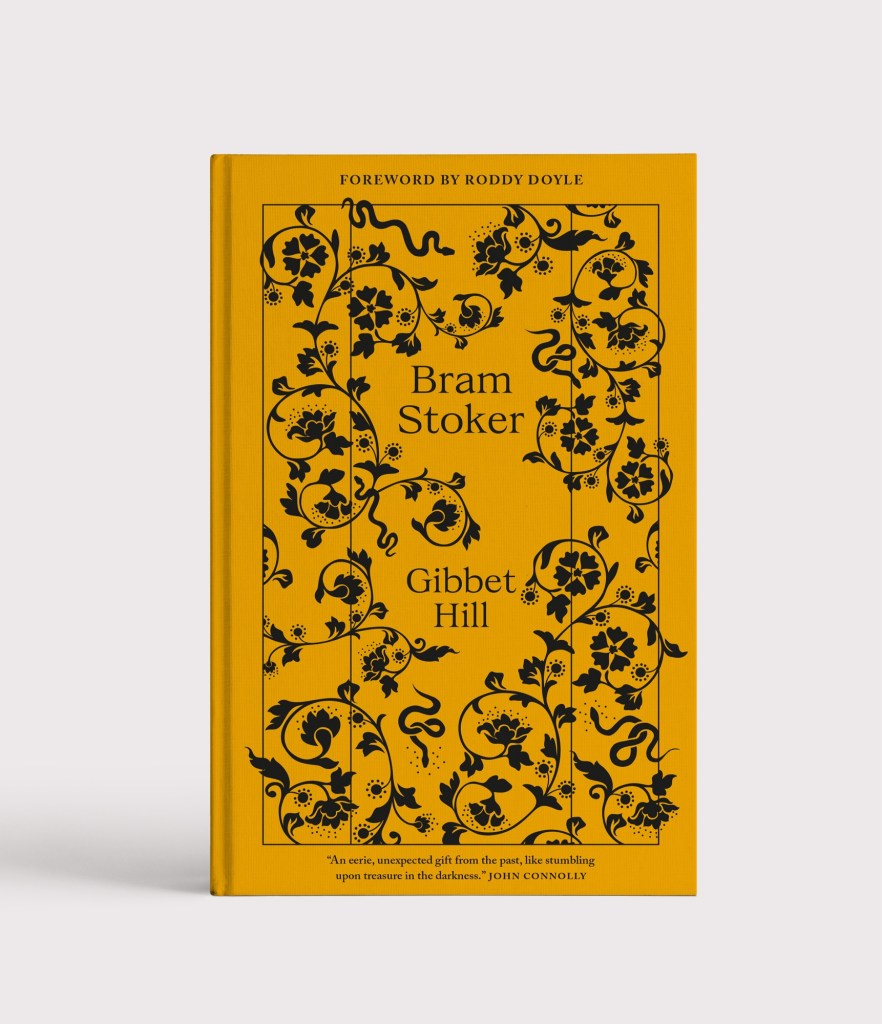
This book excerpt outlines how my sudden sensorineural hearing loss led me to a major literary discovery and a very meaningful step in my recovery and the overall arc of this blog. I hope that people who have read the whole blog can see that there’s hope in situations that can seem hopeless and that good times will come again.
——————————————————————————————
I pass Marino Crescent in Dublin every day. Bram Stoker was born there at number 15 in 1847, and his wife, Florence Balcombe, later lived at number 1. This sparked my interest in local history and reading about Stoker, which ultimately led me to search the National Library of Ireland archives to get a more detailed perspective on Stoker’s life and how he came to write Dracula.
This research, however, only came about as a result of my sudden hearing loss. I woke up one morning, aged 41, with no hearing in my left ear. It was replaced with a form of tinnitus that sounded like I was standing under Niagara Falls. After I was blindsided by the grief of losing my ability to communicate easily with the world, I took to writing about my experience. This blog helped me make sense of the situation and documented my experiences for the benefit of others on the same path. I was luckily a candidate for a cochlear implant, which squashed my tinnitus and gave me a new way of hearing. I decided to take time off work in the Rotunda Maternity Hospital in Dublin to focus on the extensive rehabilitation process, which involved auditory exercises, listening to audiobooks, simple music and environmental sounds, and reading aloud. Then, on Culture Night 2023, I found the perfect venue for my auditory exercises – the luxurious, wood-paneled Reading Room in the National Library of Ireland. After spending some time there with my children, where we looked back in time via microfilm and perused papers from the days they were born, I filled in the online reader’s card applica- tion. I could then prepare for my return to work by doing office hours in the library, while also researching Stoker in the online resources.
As I listened to simple lullabies, streamed directly to my cochlear implant to learn to hear music again, I systematically searched the British Newspaper Archives for material on Stoker. I spent several weeks reading newspaper and periodical pieces about Stoker that appeared in the press from the 1880s onwards. In this time, Bram began to appear in adverts and articles due to his early literary work and his role in the Lyceum Theatre in London. There was little that was new or novel, but then I came across something inconspicuous, something I could have easily dismissed……..
Gibbet Hill by Bram Stoker, published by The Rotunda Foundation, is out on 26 October. All proceeds from the sale of the book will go to the Charlotte Stoker Fund for research on the prevention of acquired deafness in vulnerable newborn babies. Pre-order here
If you are a new reader and have an interest in my story so far, please go back to noisysilence.ie, where you can see all the posts that detail this long and winding road. There’s a new post coming soon describing recent progress, including: literary fun, more gigs, the #HelpUsHear campaign and simple changes that can make the world accessible to d/Deaf people by default.
Thank you for reading!
 noisy silence