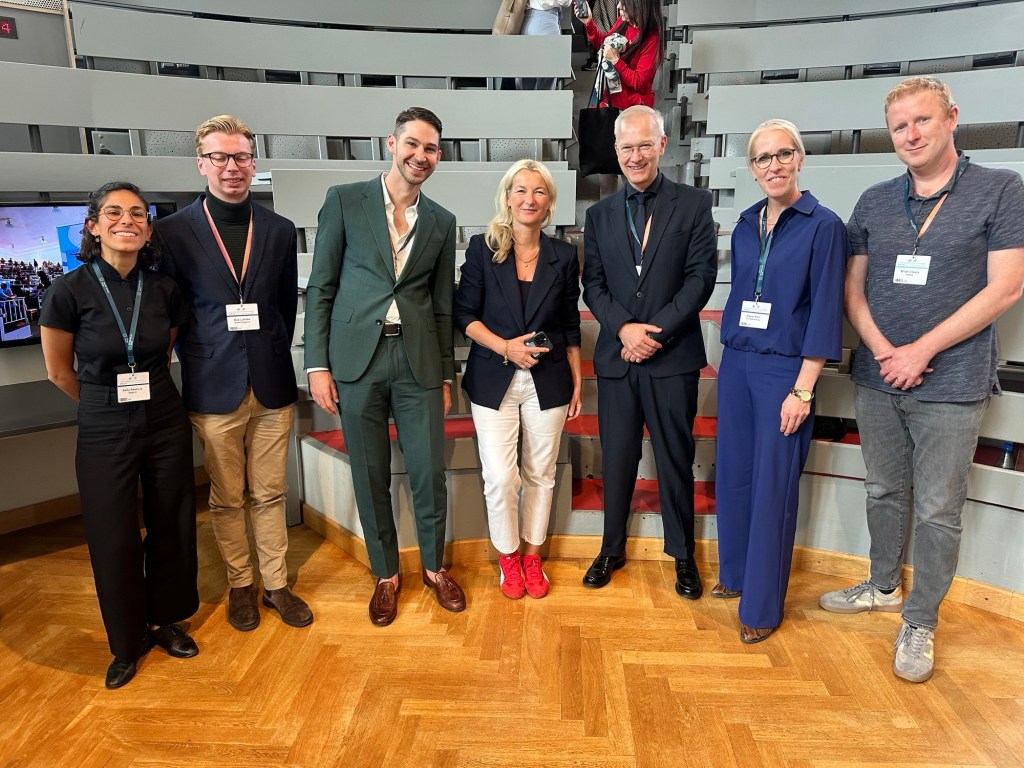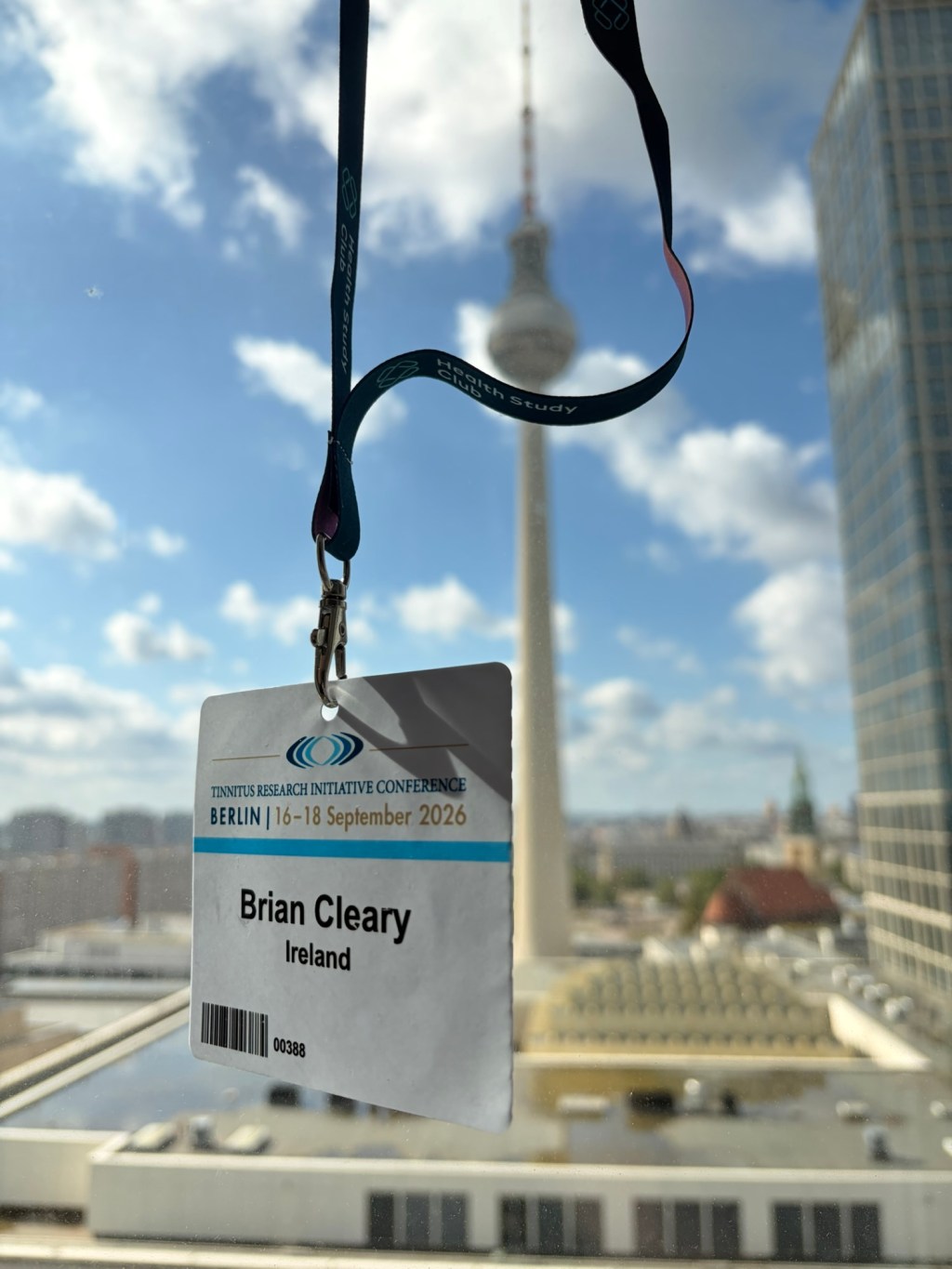
I paid up for the TRI conference in Charite, Berlin (an important place for me if you’ve read the earlier parts of this blog) in order to bring a patient voice to this important conference.
The transcript below is what I covered in the session on Tinnitus and Cochlear Implants.
It was an incredible opportunity to be back at Charite talking in a session that was chaired by Prof. Heidi Olze, the person that I emailed looking for help back in 2022. She was a superstar.
Transcript
I’m delighted to be here today to talk about the lived experience of tinnitus and cochlear implantation. 
I had normal hearing until I was 41. In late 2021 I woke up with no hearing in my left ear. Sudden sensorineural hearing loss left me in a state of profound hearing loss. The tinnitus onset was gradual. To put it in literary terms, my tinnitus was both Frankenstein’s monster and Dracula, in the sense that it not only crushed you, it also sucked the life out of you. It reacted to my sound environment: my children’s voices, social situations, music, challenging clinical environments at work all led to extremely loud tinnitus that shrunk my world and limited my capacity for everything. I stopped listening to and playing music. I thought I had gone to my last concert. Tinnitus isolated me.

Through the journey (so far) there were no opportunities to enrol in research or a prospective registry of sudden sensorineural hearing loss.
From this position of darkness I did a literature review of interventions for single sided deafness and severe tinnitus. By way of background, I’m an academic clinician working in an Irish hospital. I have a PhD in Pharmacoepidemiology and a clinical Professorship in the School of Pharmacy at the Royal College of Surgeons in Ireland.
It was evident from this work that there were multiple research groups in Europe (it’s great to see some of them represented in the room) who had published in this area and that there was a potential way out for me.
The first time that someone said they could help me, was in an email from Prof Olze’s team here in Charite. Due to limited access in the Irish health system, I got a CI in Charite in late 2022 through the EU Treatment Abroad Scheme.
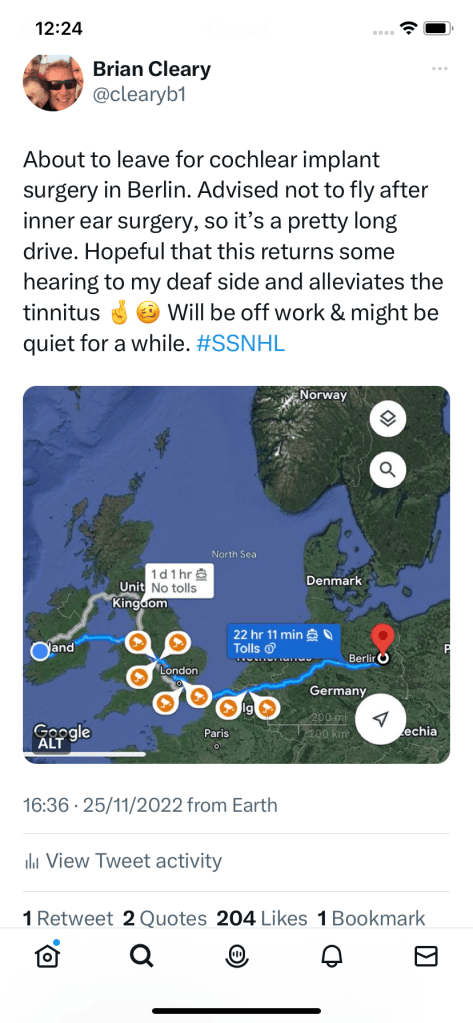
Activation day changed my life. I could hear the doctor in my left ear. Some words were tricky, but I now had binaural sound input again. As I adjusted at the front gate of the hospital and hugged my family, hearing my kids in stereo again, there was an onslaught of environmental sounds. It wasn’t until I got back to the hotel room after a few minutes walk that I realised I was experiencing silence again for the first time in a year.
I’ll close with some pleas:
Please work on public and patient involvement in your research and in this conference- invite patients and foster contribution.
Please offer SNHL patients like me the opportunity to participate in research that prospectively monitors tinnitus as it develops, and, hopefully, as it resolves following CI activation. We offer fascinating aetiological insights. We go from no tinnitus to severe tinnitus to no tinnitus while wearing the processor (well, no easily perceptible tinnitus) back to tinnitus again when we take our processor Off. Please take this important research opportunity and place it in the context of what is already proposed from an aetiological and mechanistic perspective.
Process matters. Please use open science approaches, common data models, reproducible workflows and international collaboration.
Please avoid thinking about tinnitus as one entity- my tinnitus, in the context of complete hearing loss, was not helped by all of the patient-facing materials assuming that I had residual hearing that could be used for masking or therapeutic approaches.
I was at TRI 2024 in Dublin and saw enormous attention devoted to CBT and neuromodulation approaches. These are valuable and can have a modest impact on tinnitus to reduce distress. However, as a patient whose tinnitus was profoundly altered by restoration of auditory input through cochlear implantation, I worry that the field focuses more on helping people live with tinnitus than understanding how to switch it off. We need both.
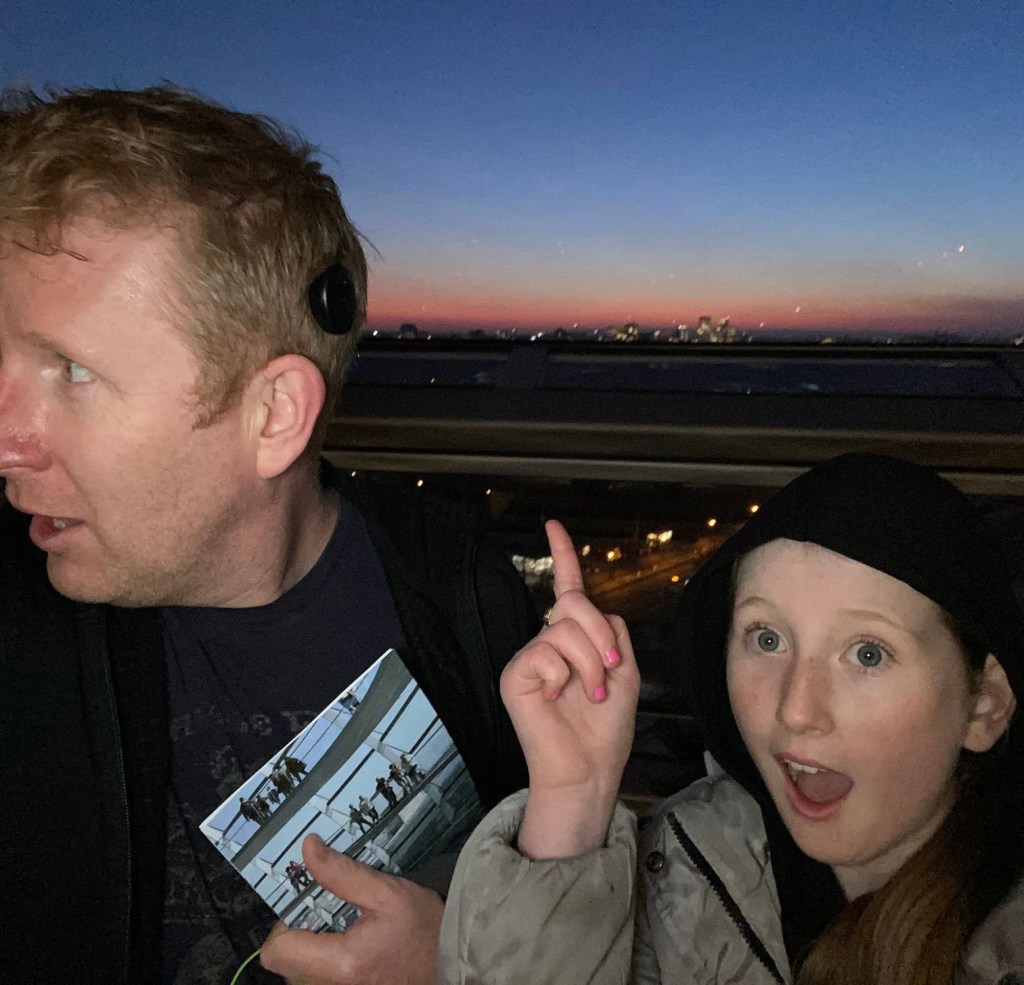
Aim higher. It is vitally important that the therapeutic toolbox is expanded with extra options for tinnitus treatment in people with and without residual hearing. Give patients the opportunity to extinguish tinnitus. Enrol people prospectively. Monitor the development and (hopefully) resolution of their tinnitus. Go out and harvest the aetiological evidence that patients like me offer.
We’re in Berlin, in a lecture hall named after someone who revolutionised the fields of microbiology, immunology, and haematology [Paul Ehrlich] because of careful experimental work that helped shed light on biological mechanisms. I hope to be back at TRI in the years to come to see the outputs of clinicians and scientists like Ehrlich and, hopefully, meet other patients like me who have been effectively cured of their tinnitus.
Thank you.