

Elation. A badly needed megadose of good news. Like a baby being born healthy or winning the lottery or getting into college. My application for cochlear implant surgery was approved by the Irish health service’s Treatment Abroad Scheme (TAS). I was sitting in the car with my son outside the supermarket waiting for my wife. Single sided deafness, tinnitus and the fatigue that travels with it mean that my long-suffering wife ends up carrying more than she should. She calls to see if she’s missing anything and I suggest a bottle of champagne. Two weeks of checking my emails, anticipating a refusal and multiple rounds of appeals, has now resulted in the best email I’ve ever received.
Subject: E112 approval
Dear Brian,
Please find attached a copy of the approval letter for your E112 application with the Treatment Abroad Scheme……..
“Holy Fuck!!!” She exclaims. On speaker. Our youngest raising an eyebrow in the back seat. The shoppers around her in SuperValu take in their side of the conversation. There is still a long and winding road with a significant amount of paperwork, assessment for suitability, surgical procedures and auditory rehabilitation, but it gives me a great chance of getting the best possible hearing that I can achieve. I don’t need to be a sob-story anymore, a cautionary tale. There’s hope of redemption and, I’ve set a precedent and blasted open a pathway to treatment for other people with the same condition as me.
We savoured it. It was a surreal celebratory evening. We were over the first hurdle. There was hope and, win or lose with the surgery, I knew that I could handle whatever was coming. There was no hope of it being worse than the previous 8 months.
It’s nice to spread good news. It’s great to have hope. There is still the reality check, that nothing is guaranteed, but tried and lost etc. It’s a beautiful way to end a holiday and I plan on how I’ll socialise the idea at work that I might need some time off to focus on my health.
It’s September. We had hopes of bringing the kids to Electric Picnic (with ear protection), but this won’t be the year. Work was much more manageable on a 4 day week and the people that I work with were amazing. As I head into the week of my initial CI assessment in Berlin, there’s a sense of tense anticipation. It’s great declining all the meetings that land that day. It’s great to have some positivity and hope. Every now and then I get slight tinnitus in my good ear and it freaks me the hell out.
I read a book on trauma that came highly recommended. The Body Keeps the Score by Bessel A. van der Volk. A lot of it resonates.
“After trauma the world becomes sharply divided between those who know and those who don’t.”
I was always conscious of there being too much focus on the hearing loss:
“Somehow the very event that caused them so much pain had also become their sole source of meaning.”
Although this overall story with its many twists and turns might be interesting to some, it’s tough to keep telling it. That’s why it is here in this convoluted form. I can set the story down here and compartmentalise it to ensure that it doesn’t become my sole source of meaning.
My hearing was a big influence on my social life; it has been sucking all interest away lately. The need to dodge COVID also limited opportunities to get out. I was not going to miss the first CI consultation. Butterflies and nervous excitement were building. There were long walks on Dollymount strand sometimes preceded by tea and a brownie from Happy Out. Although, it was time now to knock this on the head and drop down to fighting weight for the surgery.
We watched Top Gun on low volume. Turning the sound down kept the tinnitus at bay and the subtitles meant that I didn’t miss dialogue with background noise. “Subtitles not available for this title”. Thanks Sky. There was also a fantastic family dinner in Shouk. Pushing into later September, outdoors was still feasible, my deaf ear towards the music and rest of the crowd and my good ear towards my family. There’s a constant dance to get the balance right. It was a great night and worth the price of tinnitus that kept me awake for a few hours.
The night before the flight. My tinnitus is screaming. My brain is looking for new things to worry about. I see this for the trauma response that it is. I’m seeking out the next threat or emergency, having been through quite a bit of fun so far this year. Recognising this helps avoid a vicious cycle of anxiety.
I get on the plane and I’m ready to go. None of the calamities that I fretted about happened. My own passport- check. Not one of the expired ones- check. Flight booked for the right day- check. Avoided delays/cancellations- check. Appointment is for 2022, not 2023- check.
The twinkling lights of Dublin diminish below as we go over little bumps of turbulence on the ascent. Wisps of cloud start to obscure the city. On the ground, the picture zooms out to a fine line of headlights- commuters making their way to work at 6:25. The beautiful spline of a smaller road snaking its way towards town. The plane banked and we headed towards the sun.
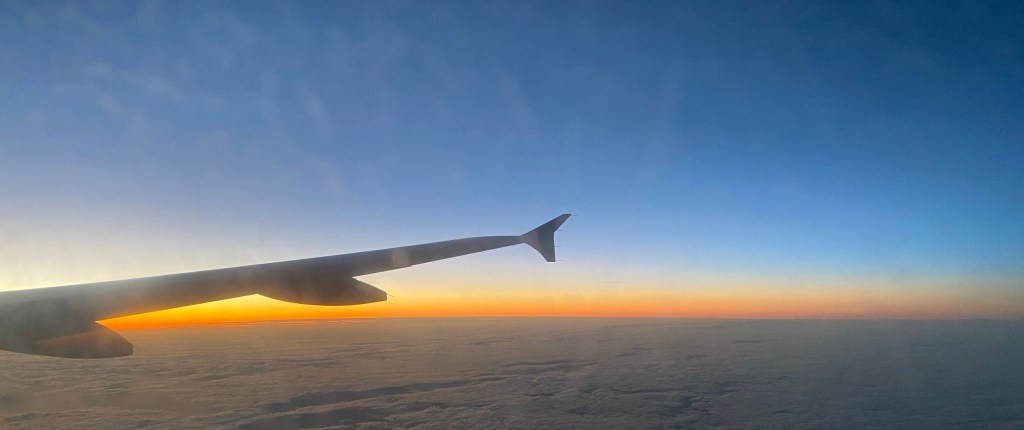
The people below were going about their daily lives, not thinking about their hearing. Worrying about things that will never happen. One of my big lessons from this whole process: Don’t worry- it is never the stuff you worry about that gets you. I think about my Mother’s leukaemia diagnosis. She was out with her friends golfing when the message came through that her blood tests were concerning and she needed to be admitted. I was at a swimming lesson with my eldest, then a little 5 year old water sprite splashing about, oblivious. There’s no turning back to the former normality. You’re an inhabitant of a new world with a new language. I wore a path from Dublin to the hospital in Galway, getting tearful on the road west as the volunteer blood bike driver speeds ahead from the traffic lights with their life-giving cargo.
Trauma induced a hypervigilant state and it’s exhausting. I wonder if this flight is one of the first steps to normality or a new way of hearing? I have my best mask on. Thin insulation from the hacking coughs about the cabin. I’ve gotten this far- one step at a time now and we’ll see what tomorrow brings.
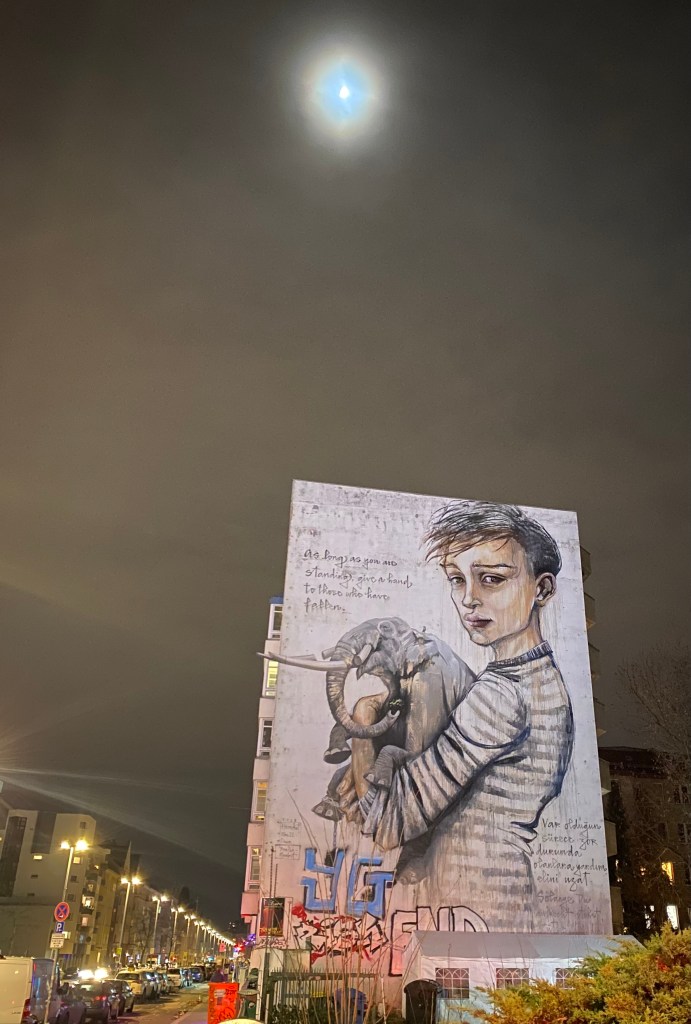
I stayed with a friend in Berlin and set off for the hospital following a fantastic breakfast spread. With all my planning, I still manage to set out for the wrong Charite campus. I realised in time and got a taxi from the Hauptbahnhof to the Mittelallee campus, landing there just in time for the appointment. I sat in the taxi taking in this surreal situation, hoping that the letter in my bag from the HSE will work and that they won’t just send me back home.
The letter does work. I got to practice with my rusty old German and get through the initial paperwork. I’m a bit of a novelty- the S2 form that was issued as part of the E112 scheme by the HSE treatment abroad scheme (TAS) essentially means- “We’ll pick up the bill”. There are several phone calls to figure out the right forms as universal health insurance in Germany means that everyone arrives with a health insurance card. The treatment abroad scheme uses a German insurer as an intermediary. The German insurer contracts with the hospital ensuring that the Irish health system accesses the necessary public treatment at public patient rates. The Irish health system reimburses the cost to the German insurer. I would need to pay any patient costs in the host country, but as I’m a public patient, there are none (so far).
There was a morning of testing. Medical and surgical history and an ENT exam first, followed by a quick trip into the basement of another hospital building to get my MRI and CT scans uploaded onto the Charite system. Then some time in the audiologist’s booth doing a pretty comprehensive battery of tests. She was great and her acknowledgement of the severity of the tinnitus felt strangely comforting. I wasn’t crazy. It was not unreasonable to seek treatment for this, wherever I could find it. I described the tinnitus testing earlier in Tinnitus Talk.
The whole enterprise of this blog is based on the “one person” principle. If this helps one person who is in a similar situation, then it is worth the effort. So, for that person, some of the practical tips:
-Stay over- this is a pretty big deal, you don’t want a late flight ruining it
-German is helpful, but not essential. Most people have a good standard of English. Google translate is your friend- you’ll need wifi and a power bank for your phone – there’s plenty of publicly accessible free wifi including in the hospital. You can translate documentation with google translate too.
-Bring your carefully considered questions list.
-Be positive- if you get this far, it’s hopeful (but never guaranteed).
-Enjoy Berlin!
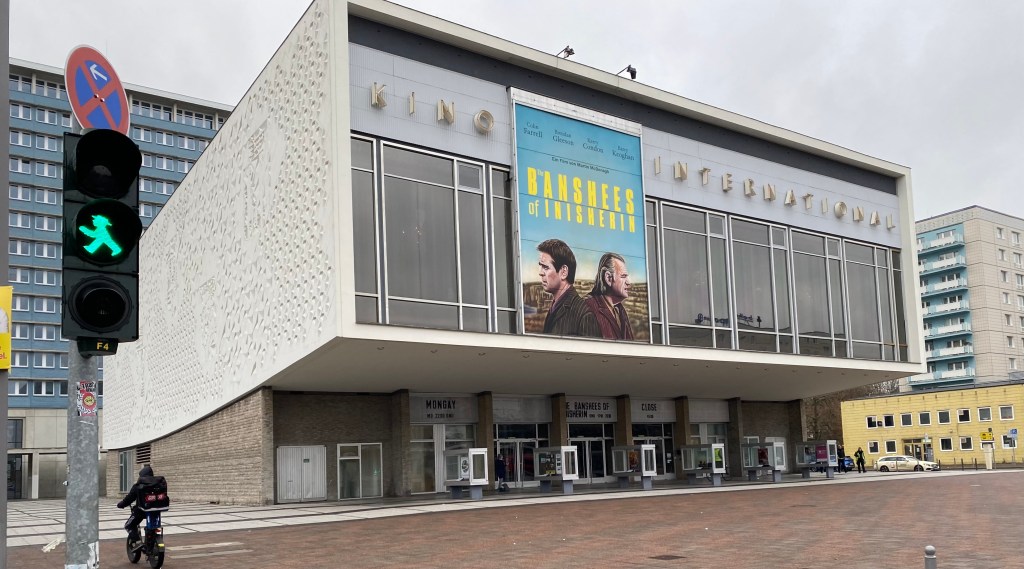
The final test was a brainstem evoked response audiometry (BERA) assessment. My brainstem had always kept me upright and breathing and I hoped that it wouldn’t let me down now. This test objectively measured my hearing thresholds and helped rule out non-cochlear causes of hearing loss. This is like the hearing test used in all newborns in the hospital that I work in, another incredible element of humanity: find hearing impaired newborns and ensure that they get hearing issues sorted to allow language development. This can include cochlear implants for some eligible babies. I thought about the little puddins being tested as I lay in the darkened room listening to various tones, hoping that my auditory nerve is doing what it should. This is one of my worries about the assessment process- is it possible that there was something that damaged my hearing upstream from the inner ear/cochlea? Will I be ruled ineligible based on the result of this test?
A few minutes later and I’m sitting in front of the doctor who has been my link via the clinic’s email address over the past few weeks. He talked me through my results. Pending review of your MRI and CT scans (which were reported as showing no abnormalities in Ireland- “See!! I told you!!” I tell my wife), I am eligible for a cochlear implant and we can schedule surgery. A beat goes by; then there’s a flood of relief. He says that the severity of my hearing loss makes me eligible. He mentions that my tinnitus is quite severe. I tell him that I would crawl to Berlin pushing a peanut with my nose if it helped get rid of the tinnitus.
We worked our way through my question list and he apologised as they were a little backed up and they won’t be able to schedule me until November or December. In my head I’m thinking “2023?”. He tells me that getting a CI in my situation is not unusual for their centre. This has been their standard of care for years.

He asks me to wait while he looks at their schedule and comes back with a date for surgery- November 29th. I can be activated after Christmas- January 3rd. I start to get a sense of where I’ll be by the time of the anniversary of the hearing loss- December 26th. We talk about logistics- no flying for three weeks after surgery. There will be inflammation after the surgery and the pressure changes could cause problems. I’ll need to be assessed by them on day 7. We could explore the option of getting stitches removed in Dublin, but if it was him, he would probably avoid a transcontinental trip in the days immediately following the surgery. In Charite, it would be a two night stay for this surgery, so that decides it- two inpatient nights plus a few nights in an Air BnB and then hit the road after the stitches come out.
We talk about the TAS and S2/E112 process. It’s new to him, but he will follow up with the finance people to make sure there are no surprises and that hope isn’t snatched away this late in the day.
I leave the hospital a little lighter. I spread the good news tentatively, with caveats, to my family. I can’t tell friends and colleagues yet as it might fall apart and I need to await confirmation of the MRI/CT review and the finance side and also make sure that the necessary sick leave can be arranged.
I stop off at Gesundbrunnen station on the way to the airport and get a Schnitzel the size of my head. Happy Out.
 noisy silence