

10/05/23
My eldest is playing the Elliott Smith song Lost & Found on the piano. It jauntily plinkety-plonks its way through the house on the regular while she perfects it. It lifts me every time I hear it. The song prompts me to recognise the ongoing grief for lost hearing and to get a sense of appreciation for my newfound post-CI hearing.
I streamed a series of articles on Cochlear Implant Rehabilitation for Adults to my CI. They’re from a great blog by Naama Tsach PhD hosted by the American Cochlear Implant Alliance.
The article on quality of life resonates strongly. It gives a great set of writing prompts which I have addressed below.
Expectation Setting
I entered this process with low expectations. I was prepared for being among the minority who get worse tinnitus. I had already gotten a handle on about a year of pretty crappy tinnitus. I’m sure I could handle it going up a notch or two if it came with some hearing benefits. I was aware of the Rockstar activations which come with immediate excellent word recognition and people who were disappointed if they didn’t get this. From my experience, the most important thing was the realisation that this would not be a “robot” or “bionic” ear replacing or “fixing” my lost hearing. I was not going to be picking up whispers across the room, making me the world’s best eavesdropper on a par with the late Maeve Binchy. A device that takes sound input from two microphones and sends it via 22 electrodes to the cochlear nerve could not possibly replace thousands of hair cells, their connecting nerves and the complex neural infrastructure that processed all that rich input. It became clear that I would not hear as well with the CI as I could with my good ear in the initial months after activation and from reading about the experiences of others.
Audiograms objectively measure how the CI performs. I was picking up sounds down to about 20 decibels with the CI across a range of frequencies when I was tested about 5 weeks after activation. This compared with hearing at 0-10 decibel across tested frequencies for my right ear. When you consider that volume is measured on a logarithmic scale, this is a pretty big difference in the ability to perceive very quiet sounds. Despite this, the CI gradually becomes an incredible tool to improve a broad range of hearing and quality of life outcomes. Hearing something is a lot better than hearing nothing. It can add to other cues such as context, speech reading and, obviously, my good ear, although that has been hampered by competing tinnitus and the loss of the summative effect that you get with two good ears as evolution intended.
What were the reasons you pursued a CI?
I think this has been addressed comprehensively in previous posts. Essentially, I needed to restore binaural input to function better in my personal, social and working life, I needed to suppress the tinnitus and (most importantly) I had a significant modifiable risk factor for dementia. Having had direct experience with a family member with dementia, this was a significant driver for me as I could see a clear path from hearing loss-induced isolation and communication challenges that could, in the long term, lead to cognitive problems.
In what ways has your hearing disability limited your daily life?
See A Day in the Life and Tinnitus Talk (or any previous post!)
Which specific situations were difficult for you to cope with before the implant (i.e., at home, work, or with certain people)?
Our children playing or making noise, normal kitchen sounds, hairdryers, alarms and multi-person conversations in a work setting with significant background noise.
Did you avoid certain situations and why?
Yes- gatherings (family or otherwise)- there was a sinking feeling if you went to an event and there was a round table in a reverberant room; noisy environments, e.g. the canteen at work, pubs, concerts, theatres, places with children playing, restaurants; dealing with people in louder environments where someone else could do it for me- my wife ended up communicating for me.
What strategies did you use in order to cope with these difficulties?
Counseling to adjust to and grieve for the loss, avoidance, developing healthy coping mechanisms including exercise and writing, gradually exposing myself to more and more noisy environments, adjusting what I could control e.g. where our team met in the canteen (less reverberant space with low ceilings), where I sat at the table in restaurants, and more one on one conversations in social situations.
Did you experience any stress or depression due to your hearing disability?
Yes, definitely. I feel I managed both as well as I could and talking therapies meant that I avoided medical treatment for anxiety and depression, although I can appreciate how these could definitely merit medical treatment in this context.
Do you enjoy listening with your CI?
Yes. Every waking hour. Nearly every day has a new hearing experience. I don’t think I will ever stop being grateful for it or savouring sound. Sometimes, if I’m stuck in traffic, I turn off the fan in the car and savour the silence. It will never get old.
Do you feel there is enhancement in communication (hearing, speaking, and speech-reading)?
Yes, although I have to temper this with the caveat that a CI does not get you back to your previous level of hearing, although the post-CI listening experience is infinitely better than what preceded it in terms of communication and hearing generally and avoiding tinnitus specifically.
Can you define these situations?
I can sit in a noisy restaurant and communicate clearly with my family, I can hear my wife if I’m driving, I can go for a walk with someone without asking them to walk on my good side, I can attend online meetings and hear clearly, I am less reliant on subtitles (although background noise on TV and in the room mean that I still use them for now), I feel that social possibilities are opening up for me rather than shutting down, I am excited about music becoming more accessible in stereo (and without reactive tinnitus) and I have some recognition of where sounds are coming from.
Do you feel more comfortable in social and communicational situations that used to be stressful prior the implantation?
Yes, but there is still some stress associated with diminished hearing and the need to use assistive devices such as remote microphones.
Do you feel more self-confident to do things you did not do in the past?
Yes. There was definitely a tendency to let other people deal with communication where there was a choice e.g. my wife dealing with the bill in a restaurant. I can even communicate in very challenging listening situations, e.g. on a plane, talking with the flight staff from a window seat- would have been very difficult previously on my deaf side.
Do you feel more independent?
Yes.
Do you feel that you have achieved the goals that you set for yourself prior to implantation? Which goals have already been achieved? Which goals have not yet been achieved?
Yes. I’m happy with my progress at this stage. I am patiently working through the rehabilitation/habilitation process, accepting that it will be slow. I have no tinnitus-related suffering anymore. My daily auditory fatigue is greatly diminished. I would like to have better word recognition in noise, and I would like to have better experiences with music, but I do see both of these slowly improving with time.
Are you satisfied with your CI?
Yes. 100%. So satisfied, that I get annoyed when I hear about people in similar situations who cannot access this amazing technology or when I encounter anti-CI bias from people who should know better.
11/05/2023
In the pool yesterday I was thinking about the hidden challenges that are out there for people with hearing problems. Life was very different with perfect hearing. You don’t realise that you’re passing through life with ease until you cross over into the world of disability. This is a crossing that most people are likely to make at some point in their lives. I also thought about transitions e.g. from perfect hearing to hearing loss and severe tinnitus, from not hearing properly when I wake up to better hearing with my CI and the reverse journey at night, leaving the CI on for as long as possible to ensure that I can hear my long-suffering wife and to minimize the tinnitus as I go to sleep.
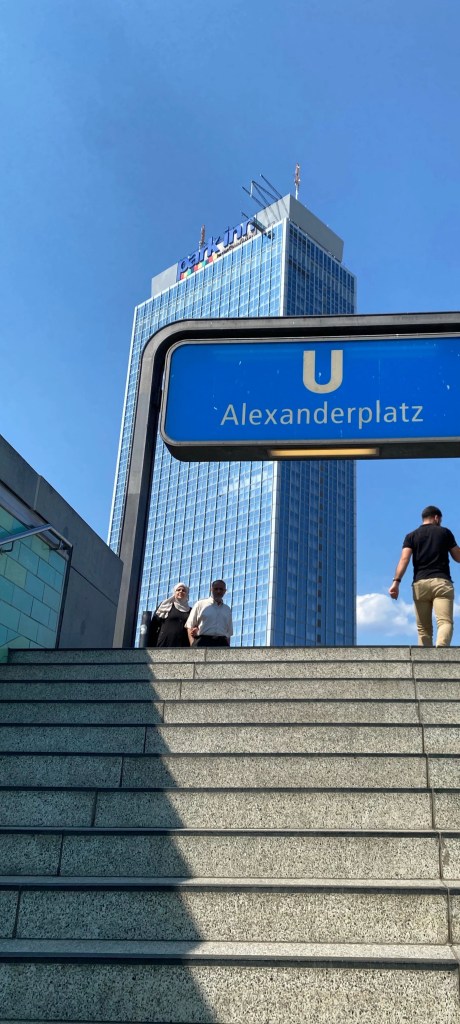
I’m privileged to be able to have perspectives on the hearing and Deaf worlds (The Irish Deaf Society use the term Deaf to cover all Deaf people, regardless of the level of hearing they have). People need to understand the importance of accessibility for all people with disabilities (and the legal requirements to make the world accessible). The ease with which hearing people pass through their daily lives, relative to Deaf people is difficult to describe. There are many comparisons, none of which really do it justice: like comparing an electric and a manual bike, being born into privilege rather than deprivation or getting around a city like Berlin with incredible integrated public transport infrastructure as opposed to moving around Dublin which needs decades of investment to get to an equivalent level. Anything which improves accessibility needs to be relentlessly pursued and people with disabilities need allies as it can be exhausting doing all the fighting on your own. I can also see the need to link with other people in a similar situation, although this is very ad hoc for me at the moment and is something that would be great to get more help with from the relevant organisations.
12/05/23
There is a joy to being out in the world, uninhibited by hearing loss. I got treated to a trip to Paris for my birthday. The kids are ravenous by the time we’ve run the gauntlet through Ryanair’s Beauvais and back to civilization in Paris. They pick the lunch spot.

Later, while walking near Le Arc d’Triumph, I see Charlie Giordano from the E-Street Band walking towards me. I compliment him on the gig in Dublin the previous weekend and we end up talking about the CI, how it works, what it sounds like, sudden hearing loss and the musician’s curse- tinnitus. I ask him to pass on my thanks to the Boss and the Band, as it was a big deal for me to have a stereo gig experience without tinnitus when I previously thought gigs were over for me. If I had the chance at that conversation again, I would have brought up the importance of accessibility at gigs, but that will be another day’s work.

14/05/23
We got out of the sweltering heat and into the Louvre. There was a section reserved near the Mona Lisa for people with disabilities, including hearing loss. My daughter comes in with me and is chuffed to be the closest person in the world to the Mona Lisa for a couple of minutes.

17/05/23
I came across Carly Sygrove’s blog on grief and have very little to add to it. She captures the feelings of loss so well and the importance of letting yourself grieve for that life without hearing loss.
19/05/23
We go out to Da Mimos, our favourite local pizza place, for the first time in ages. It is loud but good. The noise levels are close to overwhelming on my regular map, but the scan programme and forward focus improve my hearing and make the discomfort temporary and manageable.
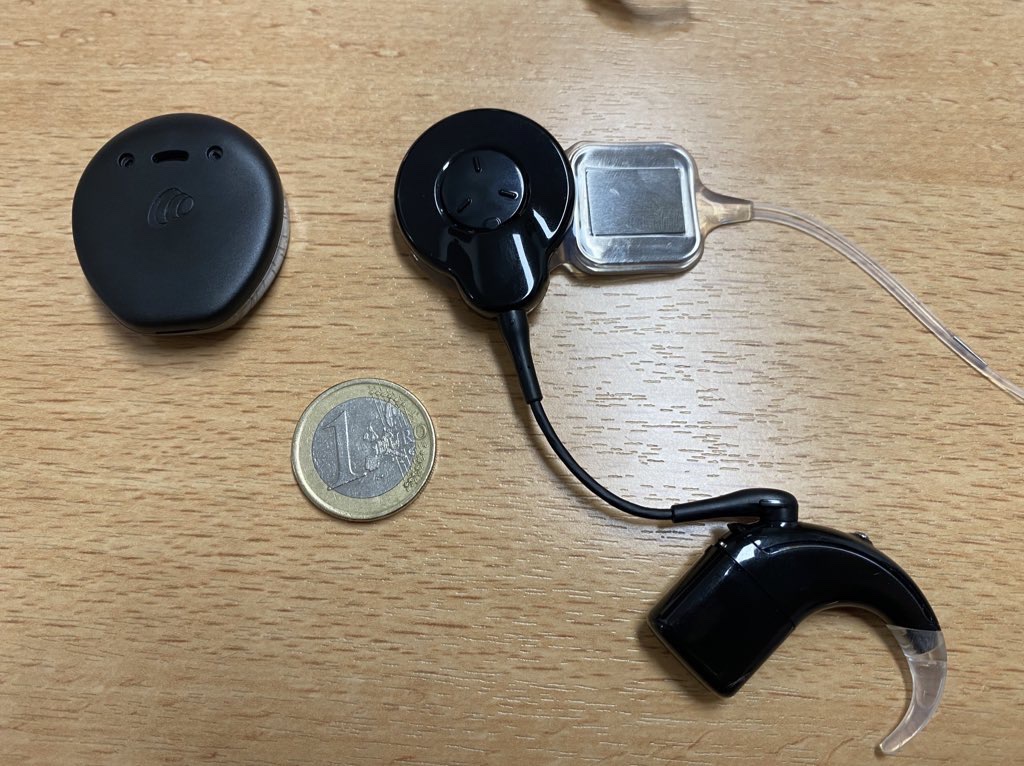
Something that I may not have emphasised enough throughout is that I am learning to use a prosthesis. I have no functional natural hearing on my left side. I use a prosthetic device to generate an electronic version of hearing that gets sent into my auditory pathway via electrodes that rest on the non-functional hair cells in my inner ear. I am going through a similar process to someone who has lost their left leg and is learning to use their prosthesis. At the start, you might be able to understand some words in optimal conditions, this evolves into more complete word recognition which in time becomes better in more challenging listening environments. Your brain starts to work with the new signals, emulating what happens with natural hearing – head shadow, squelch, summation, all the reasons why two ears are better than one. Music is a different beast and the slowest area to progress for me. My brain is learning to hear this new input properly. Going back to the prosthetic leg comparison, while it might be feasible to hobble and fall less and less in the initial weeks, it will be a long time before you can run, while dancing and some activities might be a long way off.
20/05/23
I think about all I have gained from the support forums dedicated to sudden hearing loss and cochlear implants. They are such positive spaces where people are willing to share experiences and support each other. While reading Man’s Search for Meaning, some key points resonate. The randomness of waking up and your life being suddenly completely changed is hard to accept if you cannot find some meaning in the process, some meaning in this hearing loss. I can choose what I focus my time and effort on. My hearing loss means that I get an opportunity to do good, help others, be a positive influence on the field of sudden hearing loss and tinnitus, while working to raise awareness and improve treatment pathways. I try to leave no space for bitterness or what-ifs.
No one would choose this path, but I think I can make it increasingly rewarding in time and help as many people as possible. I submitted an application to give a presentation at an international tinnitus conference that is being held in Dublin (TRI conference) and spend time distilling down the key messages. It is an opportunity to bring the lived experience of sudden hearing loss, severe tinnitus and its resolution to leaders in the field of tinnitus research. I’ve also enrolled in a creative writing course to keep me busy and might embark on other writing projects, the fruits of which might help me find further meaning in this situation.
22/05/23
I met my first fellow-CI recipient in the wild today while doing the weekly shop. They were a bilateral user and without giving any of their details, it was really, really important to meet them.
23/05/23
I was sorry to read about Paul Simon this morning as he described his sudden unilateral hearing loss and the impact it has on his ability to play music. Him and K Flay seem to be in a similar situation to me, though I can’t imagine how hard it must be as a professional musician in this situation.
I don’t stream audiobooks all the time when out walking. There are pauses to let nature and the world around me in. I stop in the sand dunes on the way back to the car on my daily walk. There are Skylarks hovering far above the dunes chirping out a rapid staccato song. They glide, wings outstretched, on hot air currents firing out their machine gun chirrups, before diving down to ground again. Their aerial acrobatics are perfect for spatial training especially when they cross from my left to my right. Bees buzz past, in stereo. The bluster of the wind is accompanying the birds and the bees. It’s there on both sides, but I’m only getting the higher frequencies through the CI and my brain isn’t as proficient at canceling out wind sounds on that side yet. The birds are doing their aerial acrobatics in pairs now. Swallows nest in the soft facade of the sand dunes. Crows perform an aerial bombardment of the strand where they drop poor mussels relentlessly on the harder parts of the beach until they yield their inner treats. The Stenaline ferry dead ahead of me creeps out of Dublin port looking like a giant metal creature sliding slowly across the dunes.

27/05/23
The CI is on off on off on off while I do some DIY with an angle grinder putting up a sun-shade. I’m wearing the most expensive set of ear defenders that they had in the hardware store.
#NH the harmonica at the end of Bob Dylan’s Like a Rolling Stone pops out of the mush. All of a sudden it’s just there on the left as distinct notes. I think music will emerge from the murk piece by piece. It just needs work and constant exposure.
I went to a music session a couple of nights ago and played/played along to a good few songs. Something that was once in a blue moon before is now a regular monthly session, with a few Blue Moons.
I have a return trip to Charité next week and I imagine there will be some auditory testing, so the kids are helping me by testing me on the words that I got wrong on Hearoes (auditory rehab app) and also on spatial training with maracas. They shake the maracas at various points of the clock around my head and I try to guess whether it’s at 6 or 7 o clock. The results go into a Google form and you can see that there is progress over time. Yesterday I got 11 out of 12 (allowing a tolerance of plus or minus one hour). Some of the spatial hearing performance may be linked to paying more attention to environmental sounds over the past few months, particularly birds and passing cars. Having said that, a neighbour said hello yesterday morning when I was coming into the house from the car and I had to do the full 360 to see where the voice came from – more work needed!
30/05/23
This Must Be the Place by Talking Heads is on in the changing room after my swim. I don’t use the aqua kit for the CI when I’m swimming. There are a limited number of uses and I’ll use it when it’s needed more than the daily pool swim. As a result I get a tinnitus taster (it is more subdued now than it’s former self) and I get to cross that threshold from unilateral deafness to stereo hearing. I use the hairdryer to ensure that the processor and coil/magnet are not going on wet hair. There are horror stories of under-magnet bald spots due to trapped moisture leading to fungal infections. I rest the processor on my ear, and lift the dangling coil/magnet until it snaps into place. I push the power button and the volume and quality of the music noticeably increase. It’s far from perfect stereo hearing, but as I’ve said before it’s infinitely better than the old dead sensation on that side of my head.
After the swim I see that there are draft global guidelines for Cochlear Implants for adults and tomorrow is the last day for comments. I sit under the newly installed sunshade and work through the guideline.
31/05/23
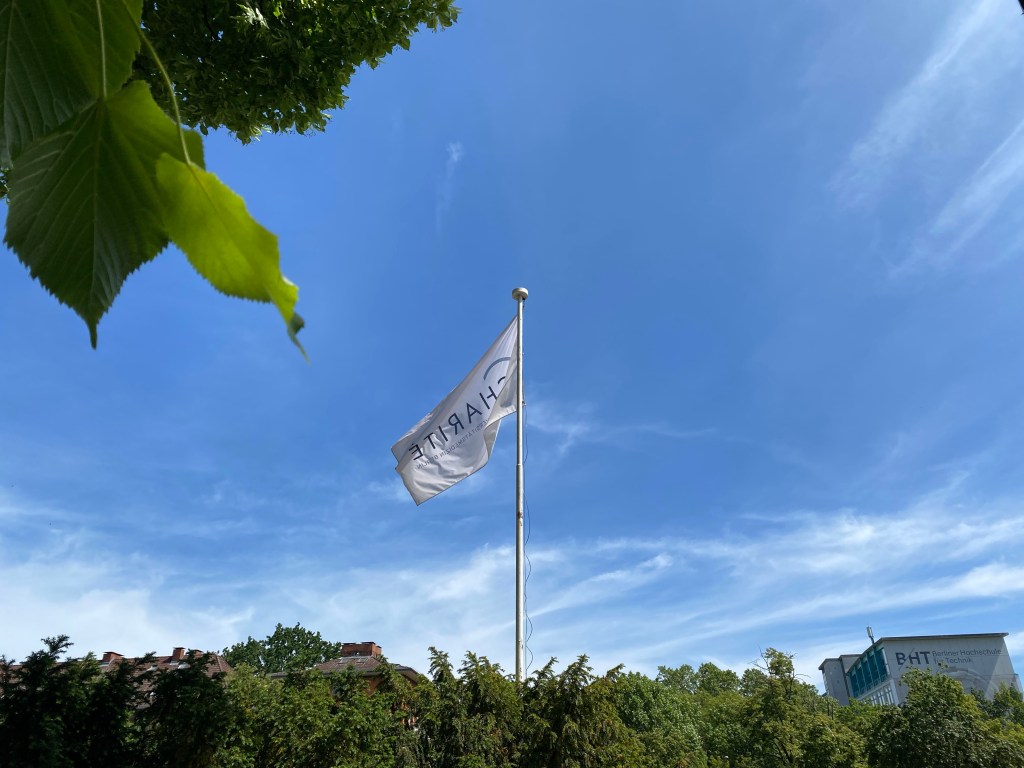
Back to Charité for my six-month check up. It has been a pretty crazy and surreal time since the surgery. I’ve gained so much from this process. In the past week I’ve done many things that would not have been feasible without the CI: played at a music session, went to a school concert/musical, met a friend for lunch and another for pints. All of these would have been a struggle or would not have happened before this process. It’s not all rosy. My hearing is not clear on the CI side and I need to be near the sound source to hear well. I can press the button on the CI to cycle through the 4 programmes. Each programme has beeps to identify it. With my current map I can hear two fuzzy static sounds, whereas there are four clear beeps that signal the use of the original (louder) Charité map. I need to move towards this clarity for all speech and sound.
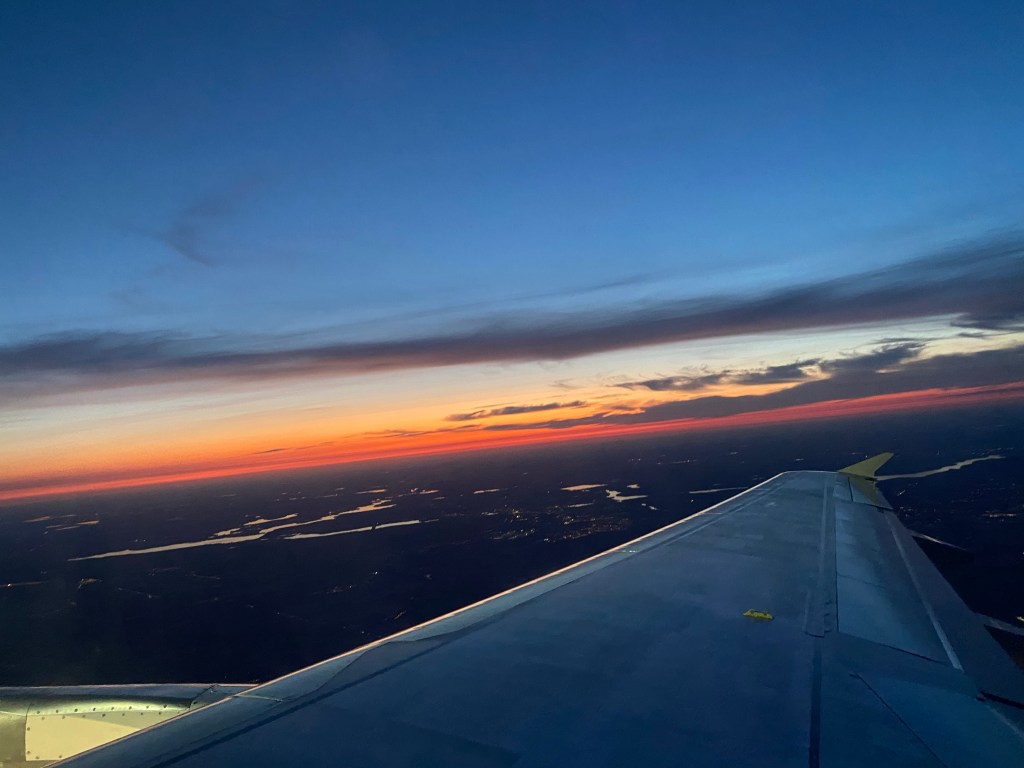
We fly over a sunny Dublin, over Dollymount, over the seal colony, over the ferry heading to Wales (and thoughts of that blustery November day of The Trip), over the bridges connecting Holyhead Island to the main land, over the mountains of Snowdonia, and over the entire land/sea trek that seems unbelievable now when I look back. If I had offered my then self the outcome that I have now, I would have grabbed it and run. It’s great to feel happy with the outputs from the process and have zero regrets about how I tackled this. I think I’m lucky and would caution anyone going down this path that outcomes vary, but good outcomes seem a lot more likely than bad. Fingers crossed they’re happy with progress today and that my audiometry testing is up to scratch. I’ll have to emphasise the change in the tinnitus. In the past few days it has been very quiet even with the processor off. If I keep feeding my brain sound, will I eventually kill the tinnitus?
While my newfound CI hearing does not completely replace what was lost, the CI squashed my tinnitus and I have found silence again.
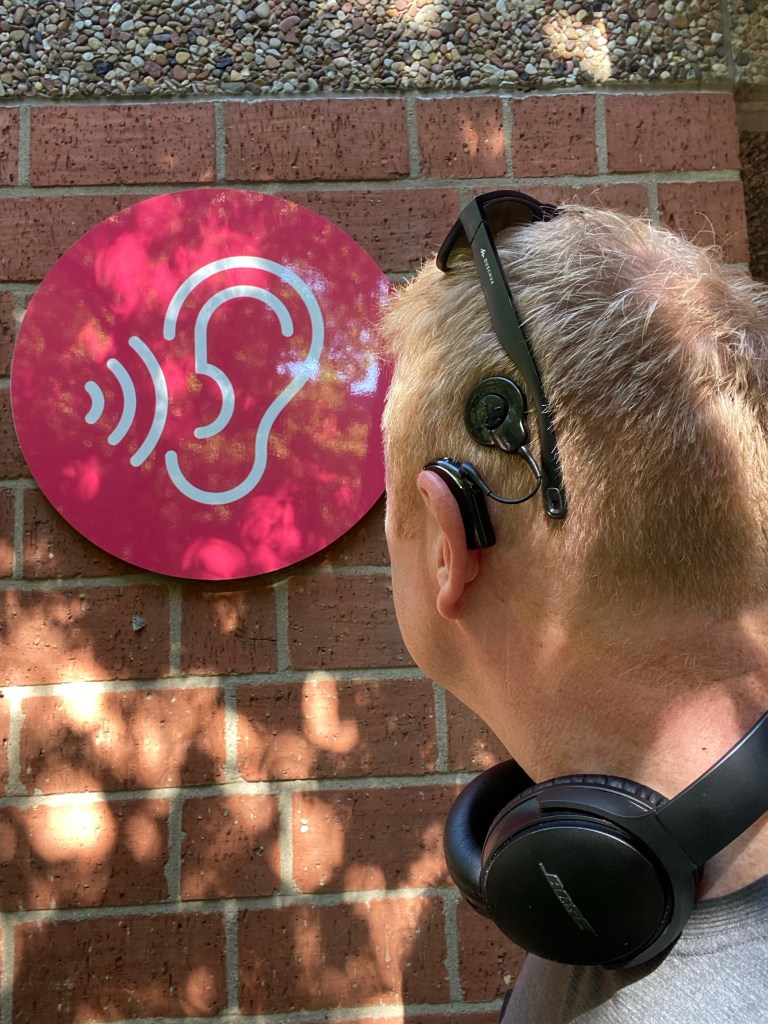
 noisy silence